Trader Joe's celebrates 20 years on Monroe Street.
Behind the cheerful signs and Hawaiian shirts, an investigation reveals a shocking pattern.
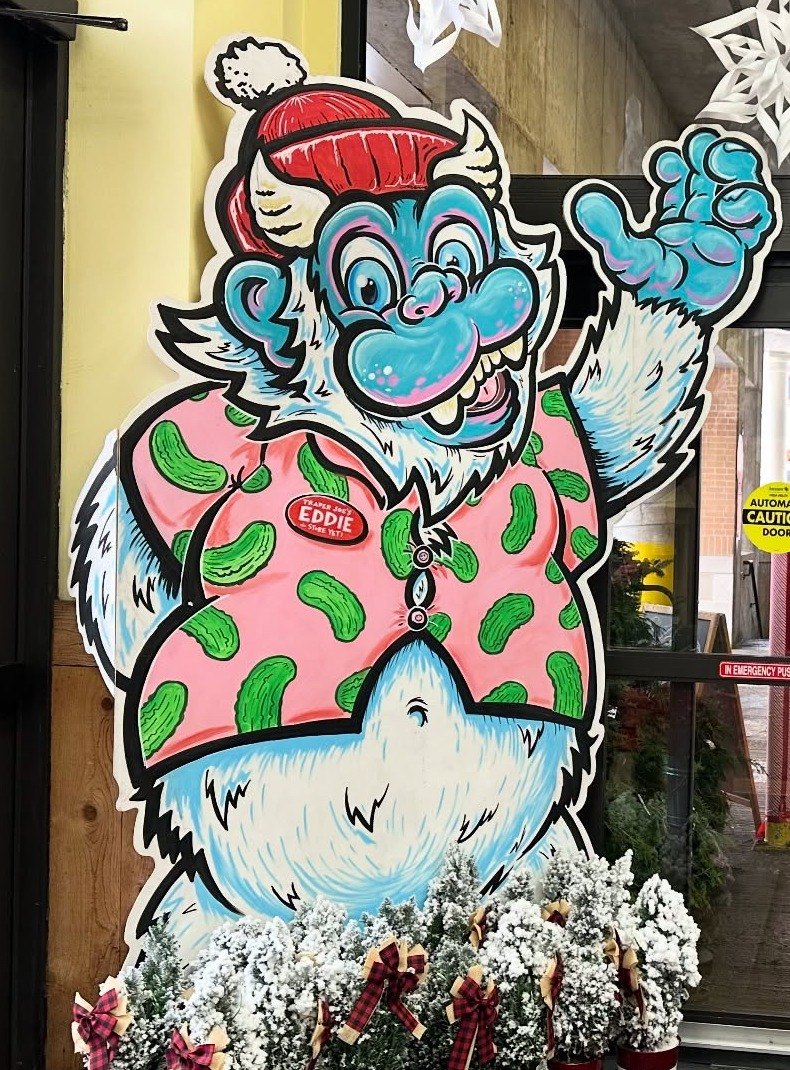
But before there was Trader Joe’s, there was chaos.
There is neither the time nor space here to fully report on how Trader Joe’s came to Monroe Street, so the official record has been condensed for brevity and a reasonable degree of historical accuracy.
There was Ken Kopp’s Neighborhood Grocery, then Walgreens tried to come and caused hysteria, then neighbors organized, then came a proposed neighborhood co-op, followed by years of redevelopment proposals, then Willy Street Co-op almost moved in, finally Trader Joe’s was approved, and then everyone immediately lost their minds for cookie butter.
On October 20, 2006, Trader Joe’s officially opened its doors on Monroe Street. Twenty years later, it’s difficult to imagine the neighborhood without it.
But anniversaries are no excuse to abandon journalistic scrutiny. Twenty years is a long time for any business to operate without someone asking a few uncomfortable questions.
And so, the Monroe Street Tattler launched an investigation.
The investigation initially showed promise. The Tattler’s website tip line received not one, but two complaints about the store’s new hours, including one particularly pointed submission: “Trader Joes New Hours Suck. They should not do this.”
The complaints arrived suspiciously close together, raising the possibility that our two sources were, in fact, one disgruntled neighbor.
Unfortunately, that was about as scandalous as things got.
What began as a search for dirt instead uncovered a rather alarming pattern of generosity, goodwill, and wholesome behavior.
As if we all needed any more reasons to love Trader Joe’s; we present our findings.
The Evidence: Secret Food Distribution Network Operating Inside Trader Joe’s
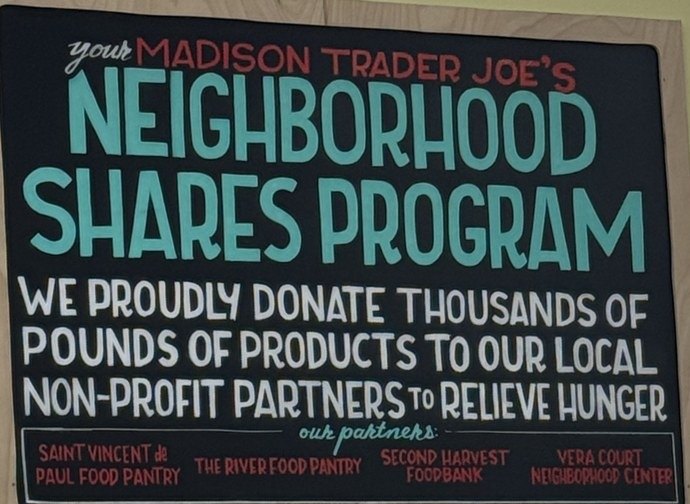
Thousands of pounds of food products are donated to local organizations working to relieve hunger. No food goes to waste.
The recipients currently include Saint Vincent de Paul Food Pantry, The River Food Pantry, Second Harvest Foodbank, and Vera Court Neighborhood Center.
And this is hardly a closely guarded secret. Inside the store, a painted sign announces their Neighborhood Shares Program, putting the evidence right on the wall for everyone to see.
A Flower Operation Hiding in Plain Sight
Our investigation uncovered a second distribution operation involving the previous day’s unsold flowers, which are donated to local senior living communities.
The transfers take place in broad daylight. Vans arrive, flowers are loaded, and the vehicles depart with little effort to conceal the operation.
Inside the store, a separate initiative known as the “Bucket of Sunshine” distributes flowers directly to shoppers.
Readers who witness these exchanges are advised to remain calm.
The Pumpkins Have Been Disappearing

Every autumn, Trader Joe’s stocks its familiar assortment of pumpkins. But what happens to the ones nobody buys? The pumpkins are donated to Henry Vilas Zoo, where they become food for the animals.
“Yes! They gave us pumpkins this year and our animals loved them!” confirmed the zoo.
In fact, the zoo receives enough pumpkins from Trader Joe’s that it no longer accepts pumpkin donations from the general public.
A pumpkin that fails to make it onto someone’s front porch instead becomes lunch for a zoo animal. We now direct you, the reader, to the accompanying photograph, courtesy of the zoo, and ask: Have you ever seen anything so outrageously adorable?
The Artwork Is an Inside Job
An investigation into the colorful signs and handwritten displays throughout Trader Joe’s led us to a tightly squeezed back room near the bathrooms, where the store’s artists work.
Our attempt to photograph the artists at work was swiftly intercepted. Not one, but two employees approached, both suspiciously eager to assist and redirect us toward the main store, away from the back room.
A classic attempt to distract the press, we suspect.
Further inquiries revealed the existence of another room, possibly adjoining the underground parking area. Unfortunately, access was not granted, despite the presentation of our homemade press badge.
What goes on behind these doors remains a mystery.
What we did establish is that the colorful signs, illustrations, and handwritten product cards throughout Trader Joe’s are created by actual local employees. Each store has its own artists, giving its displays a distinctly local character.
And the artistic operation extends well beyond the store walls.
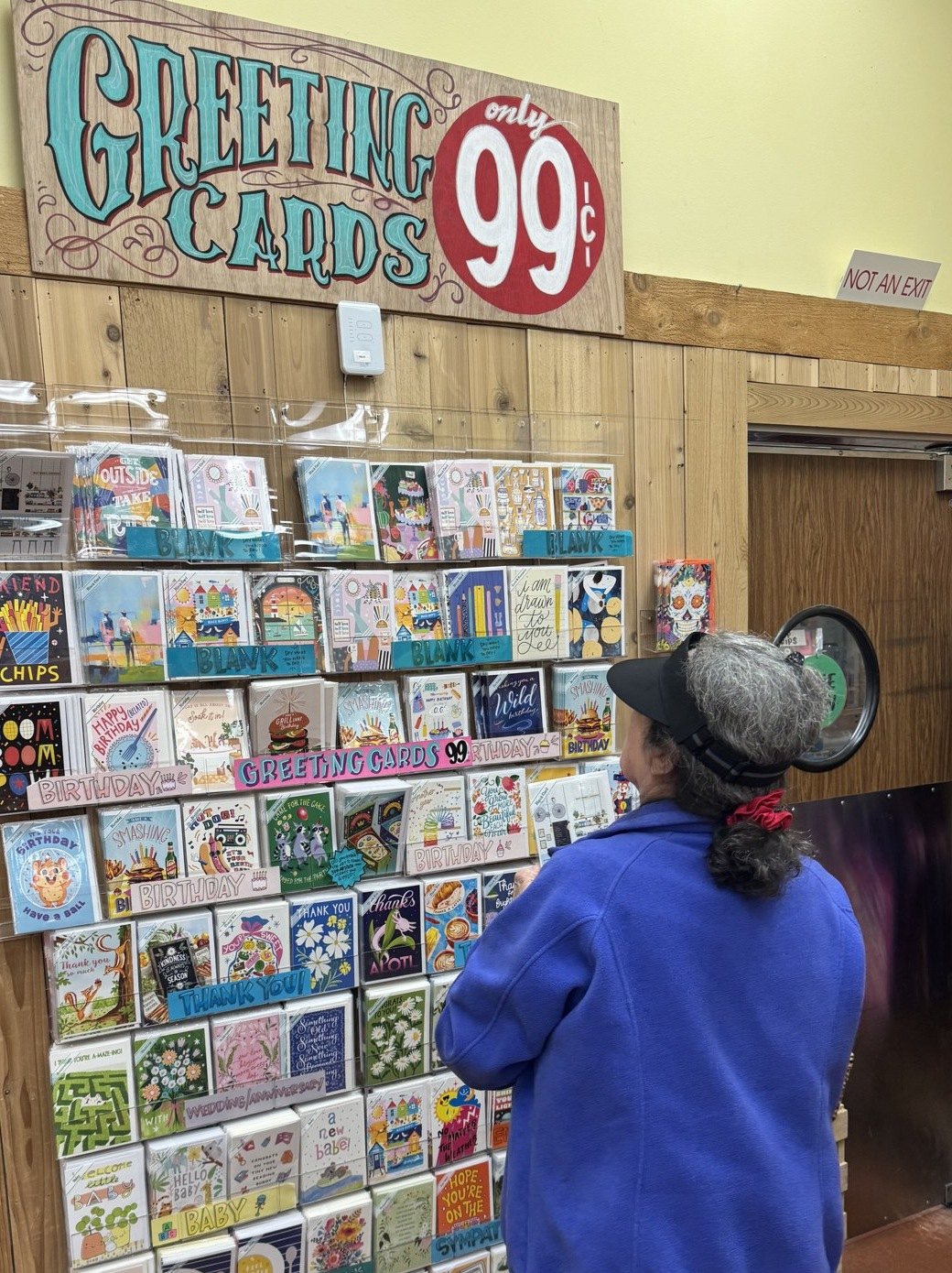
Those 99-cent greeting cards? The artwork is created by national Trader Joe’s employees, too. Not outsourced to an outside design firm. Not generated by artificial intelligence. Actual employees creating original artwork for cards that sell for less than a dollar.
All this artistic talent, devoted to selling groceries and wishing people a happy birthday.
They’ve Been Here All Along
Seven employees who were hired when the Monroe Street Trader Joe’s opened in 2006 are still working there twenty years later, alongside many other longtime employees.
They’re the familiar faces who remember your name, ask about your kids or pets, and somehow make a national grocery chain feel like a neighborhood store. They offer recommendations, strike up conversations, and bring a little warmth to what might otherwise be an ordinary grocery run.
The products may come and go, but it’s the people behind the Hawaiian shirts who make Trader Joe’s a neighborhood institution.
Twenty Years Later
Twenty years ago, Monroe Street was embroiled in a rather spirited debate over what belonged on this corner of the neighborhood.
Today, it’s difficult to imagine the street without Trader Joe’s.
The Tattler had hoped to commemorate the occasion with a scandal. Instead, we find ourselves offering congratulations.
Happy 20th anniversary, Trader Joe’s. Thanks for being a great neighbor.